 Greater Cincinnati Friends of Jung “Enlightenment is not imagining figures of light but making the darkness conscious.”
Carl Gustav Jung
Gallery
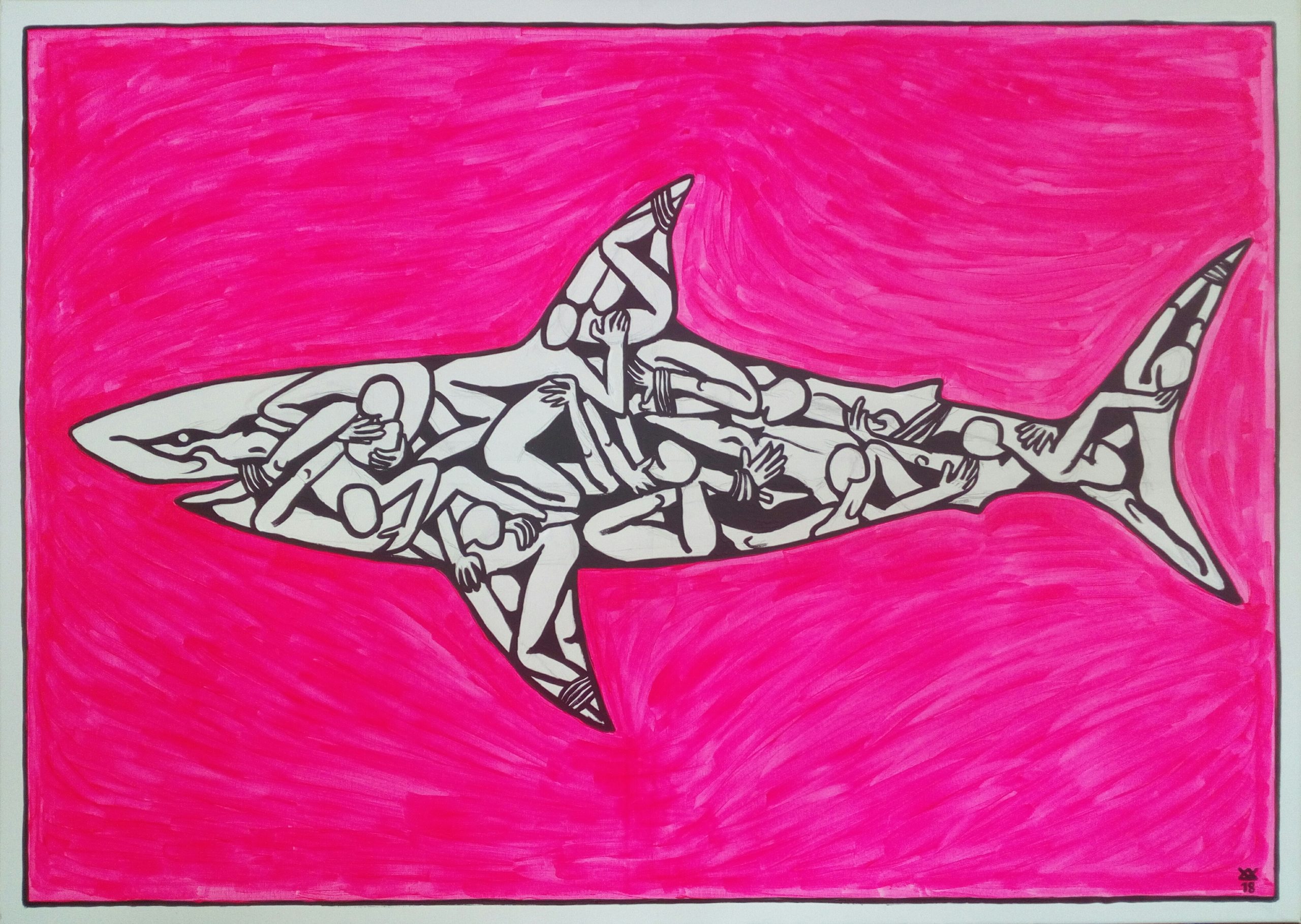
Images drawing inspiration from Jungian themes
-Vladimir Kiseljov
http://www.vladimirkiseljov.com
Below are a series of paintings by Vladimir Kiseljov, graduate of SSUR Brno, JAMU Brno and Kunstuniversitat Graz.
Vladimir is a painter, performer, set designer and writer based in Prague, Czech Republic. Vladimir's expressive paintings aim to convey his synesthetic perception of the world - the artist perceives music and all other sensorial perceptions in color, thus connecting all the senses of the viewer with his paintings - colors, philosophical meaning, music, movement, space and time. He has published two books with his paintings and text - The Mysteries of Richard Wagner in 2013 and The Mysteries Inscribed in Faces in 2019.
He carries out unique painting performances together with musicians. Vladimir's work is archetypal. The characters he paints are archetypes. He draws on the collective unconscious, as in Jung's RED BOOK.
(Thanks to Deb Lewis for submitting these marvelous images. They are shared with the artist's permission.)
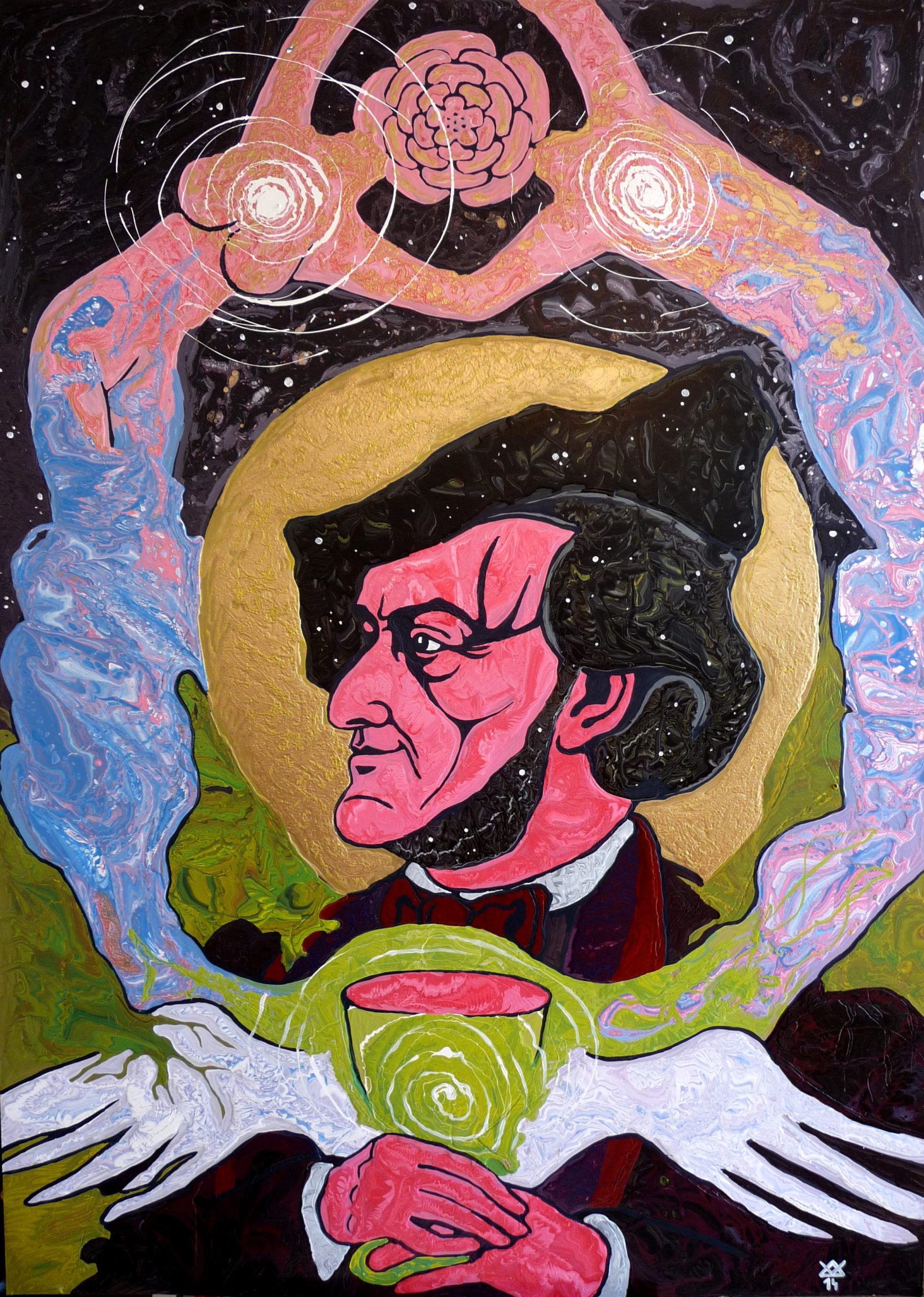
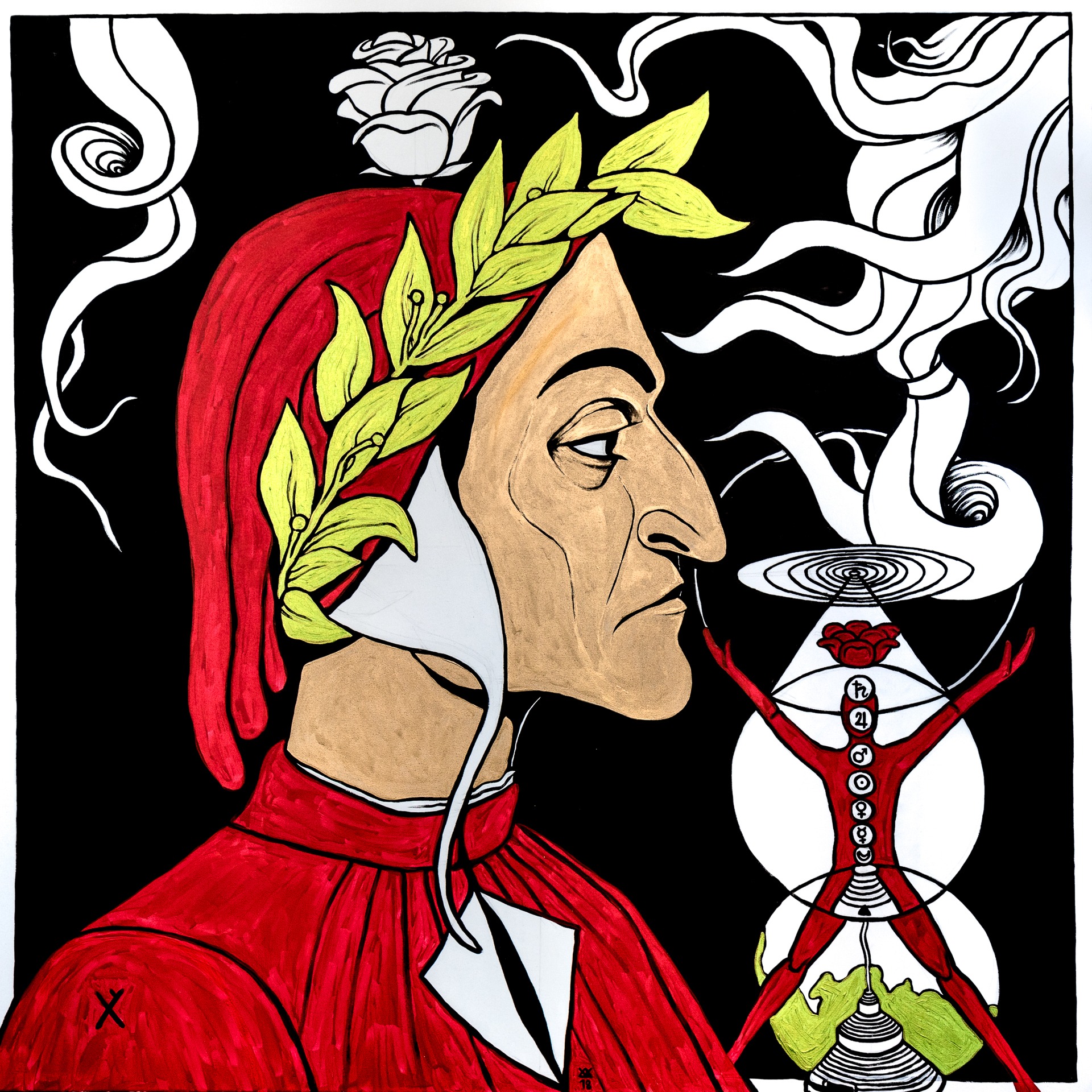
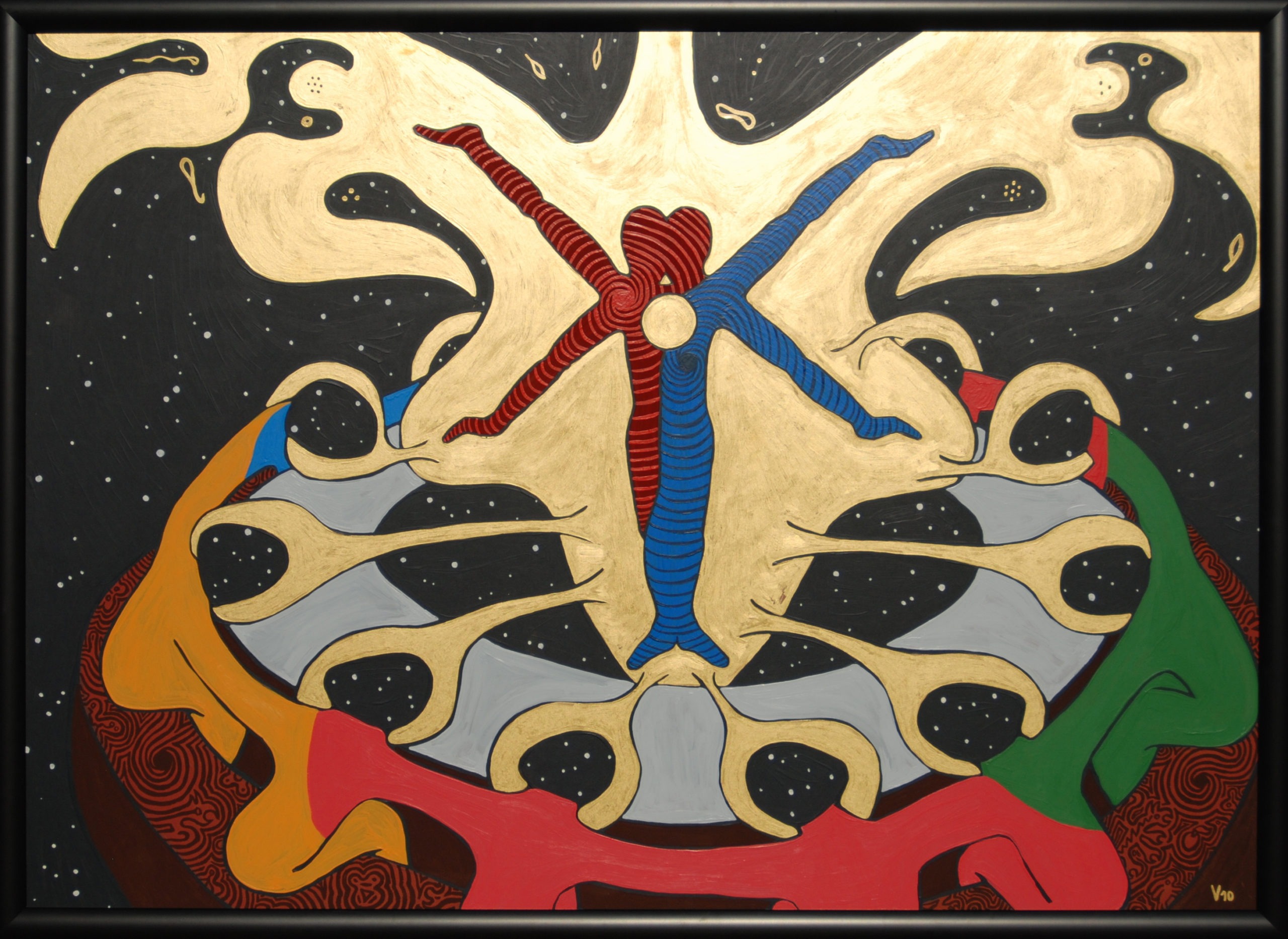
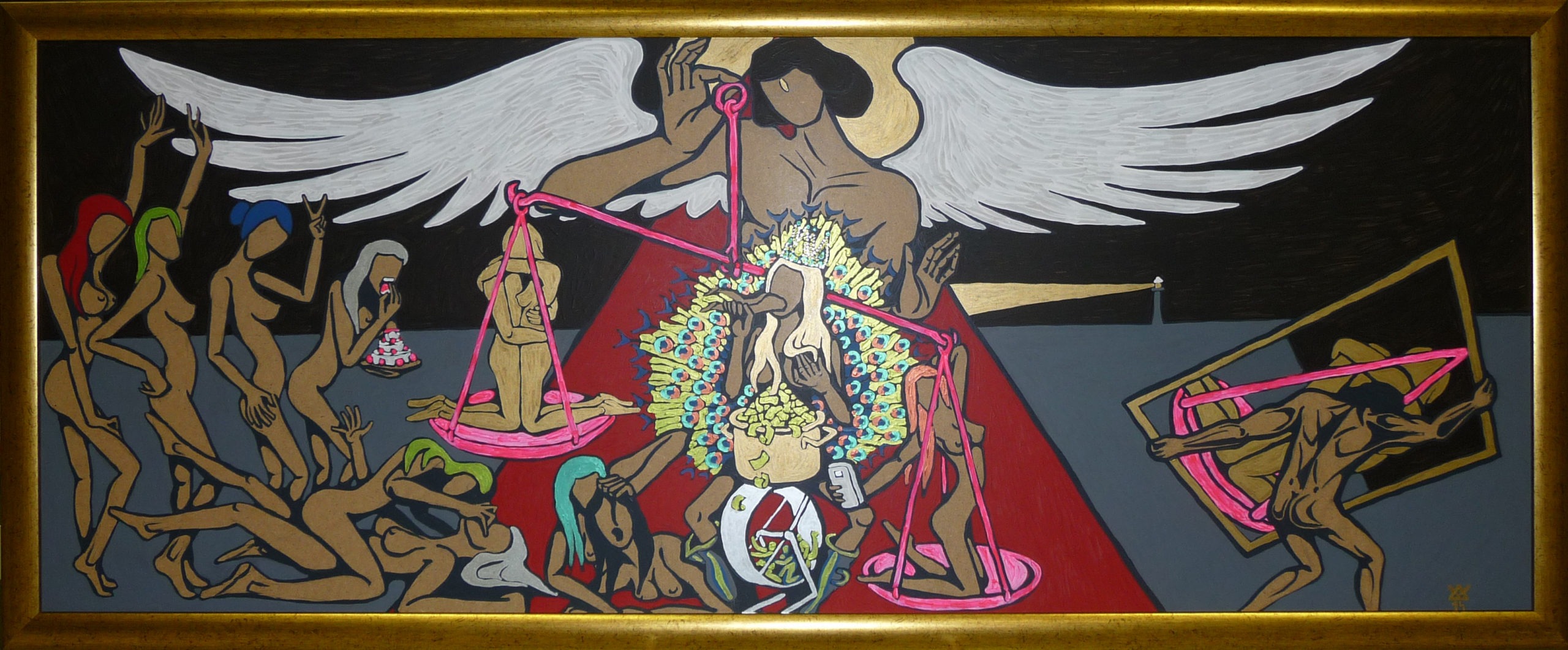
*******************
Images by C.G Jung
-The Red Book
(Thanks to Jim Slouffman for curating these images from Jung's Red Book.)

Image 54, The Red Book
Image 54 in The Red Book was given a title by Jung – Brahmanaspati, a Vedic deity presiding over prayer and the text of the Veda. This mythical reference further supports the theme of deep meditation. Brahmanaspati was also identified with Agni, the god of fire and with a deity of vegetation. The image is accompanied by the following [translated] incantation:
Amen, you are the lord of the beginning.
Amen, you are the star of the East.
Amen, you are the flower that blooms over everything.
Amen, you are the deer that breaks out of the forest.
Amen, you are the song that sounds far over the.
Amen, you are the beginning and the end.
----------------------------------------------------

Image 59, The Red Book
Image 59 entitled “hiranyagarbha” in The Red Book is part of a sequence which symbolically depicts the regeneration of Izdubar. The entire sequence depicts the rebirth of God in Jung’s soul, and represents a renewal of life and vitality. In the Rig Veda, hiranyagarbha was the primal seed from which Brahma was born. In Jung’s copy of vol. 32 of the Sacred Books of the East (Vedic Hymns) the only section that is cut out is the opening one, a hymn:
“To the Unknown God.” This begins “In the beginning there arose the Golden Child (Hiranyagarbha): as soon as born, he alone was the lord of all that is. He established the earth and this heaven: – Who is the God to whom we shall offer sacrifice?” (p.1).
In Jung’s copy of the Upanishads in the Sacred
Books of the East, there is a piece of paper inserted near page 311 of the
Maitrâyana-Brâhmana-Upanishad, a passage describing the Self, which
begins, “And the same Self is also called…Hiranyagarbha” (vol.
15, pt. 2).
The
image is accompanied by the following [translated] text:
Come to us, we who are willing from our own will.
Come to us, we who understand you from our own spirit.
Come to us, we who will warm you at our own fire.
Come to us, we who will heal you with our own art.
Come to us, we who will produce you out of our own body.
Come, child, to father and mother.
----------------------------------------------------

Image 109, The Red Book
"And, furthermore, you know what people say about snakebite—that you’ll only talk about it with your fellow victims: only they will understand the pain and forgive you for all the things it made you do. Well, something much more painful than a snake has bitten me in my most sensitive part—I mean my heart, or my soul, or whatever you want to call it, which has been struck and bitten by philosophy, whose grip on young and eager souls is much more vicious than a viper’s and makes them do the most amazing things. Now, all you people here, Phaedrus, Agathon, Eryximachus, Pausanias, Aristodemus, Aristophanes—I need not mention Socrates himself—and all the rest, have all shared in the madness, the Bacchic frenzy of philosophy. And that’s why you will hear the rest of my story; you will understand and forgive both what I did then and what I say now."
- Plato, The Symposium
“The spirit of the depths took my understanding and all my knowledge and placed them at the service of the inexplicable and the paradoxical. He robbed me of speech and writing for everything that was not in his service, namely the melting together of sense and nonsense, which produces the supreme meaning.”
- C.G. Jung, The Red Book: Liber Novus
*******************
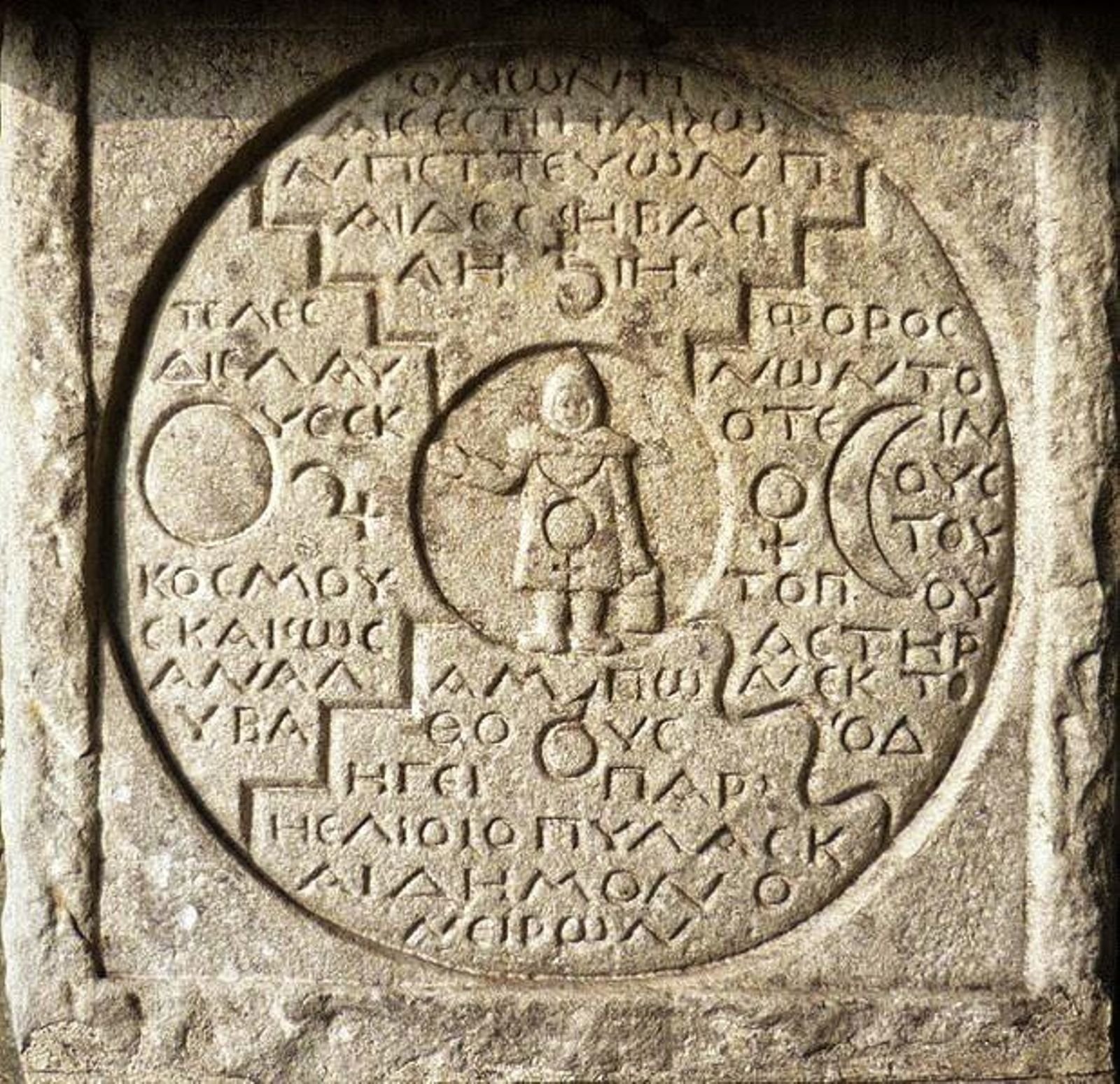
-The Bollingen Stone
This stone cube was carved by Carl Jung and placed at his Bollingen Tower on Lake Zurich, commemorating his 75th birthday in 1950, inscribed with alchemical/psychological themes and a figure of Telesphorus, symbolizing the "Philosopher's Stone" and his own inner transformation, a unique yet universal monument to psyche and matter.
https://gettherapybirmingham.com/dissecting-the-symbolism-in-carl-jungs-bollingen-stone/
WATCH this short video in which Jung discusses his Bollingen Stone:
https://www.youtube.com/watch?v=qeEQtJ6HBTo&authuser=0
(The video begins with French subtitles, but then transitions to English. You can SKIP through ads.)
.GIF)